


Korean Street Food: What to Try and What Makes It Special
Korean street food is a vibrant and lively part of Korean gastronomy. Many dishes now served in restaurants first appeared on the streets — at markets, festivals, and street stalls. It's not just a quick snack, but food that creates a mood and stays with you after the first bite.
Korean street food is valued for its rich flavor, familiar forms, and the feeling of 'eating here and now.'
What Counts as Korean Street Food
Korean street cuisine formed as 'everyday food:'
-
hearty
-
accessible
-
bold in flavor
Many dishes were made quickly and eaten on the go, and over time moved into restaurant format while keeping their street character.
Most Popular Korean Street Food Dishes
Among Korean street food, there are items that have become true symbols of the cuisine and are still associated specifically with the street.
Dishes to Start With:
-
Tteokbokki — rice cakes in spicy sauce based on gochujang paste. One of the most recognizable Korean street food dishes: bright, filling, and intense.
-
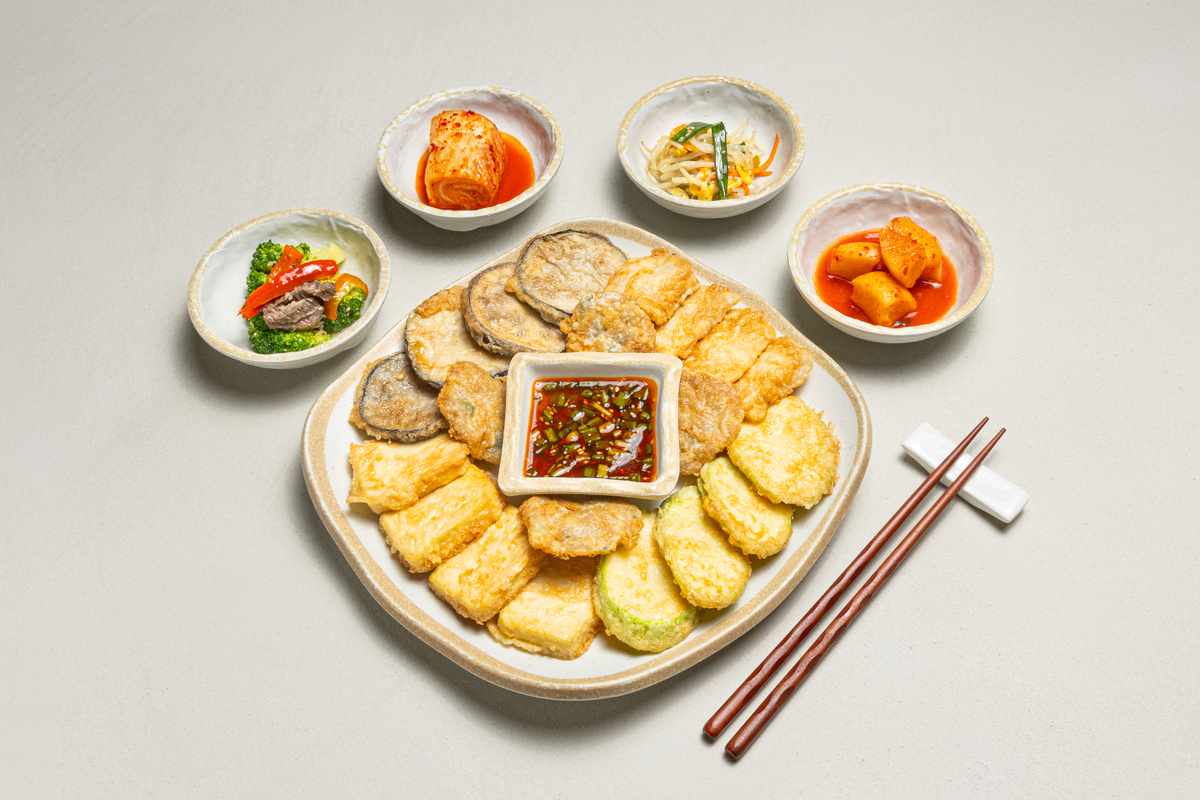
Tigim — foods fried in batter with a crispy coating. In street format, these are usually vegetables and seafood, while restaurants offer a wider range of ingredients.
-
Gimbap — rice with fillings wrapped in nori seaweed. It's often called Korean fast food: gimbap is convenient to eat, filling, and perfect for a quick snack.
These dishes maintain street simplicity, but in a restaurant get a more precise flavor balance and consistent quality.
Fried Snacks and Street Classics
Fried dishes that are convenient to eat with your hands and share with company hold a special place in Korean street food.
-
Dakk nalge — chicken wings fried in batter
-
Yangnyeom dakk nalge — wings in spicy sauce
-
Ganjang dakk nalge — version in soy sauce
-
Fried chicken — fried chicken that has become a symbol of modern Korean street food
These dishes are especially popular in the evening and are associated with the lively, bustling atmosphere of Korean streets.
Haemul Pajeon: A Dish with Street Roots
Haemul pajeon — a Korean pancake with green onions and seafood — was traditionally made at markets and during festivals, especially in rainy weather. Over time, it became popular in restaurants as well.
Today, haemul pajeon is an example of a dish that:
-
has street origins
-
is prepared as a full restaurant dish
-
is served hot, with a crispy crust and rich flavor
How Street Food Differs from Restaurant Food
Street format is about speed and simplicity. Restaurant format is about balance and consistency.
In a restaurant, dishes with street roots:
-
are made from more carefully selected ingredients
-
have more precisely balanced sauces and texture
-
are served as part of the overall meal
At our Korean restaurant, street-style dishes are prepared to preserve their character while making the taste more refined and harmonious — the way it should be at the table, not on the go.
Why Korean Street Food Is So Popular
Korean street food is loved for:
-
bold flavors
-
heartiness
-
familiar combinations
-
emotional appeal
Many people begin their introduction to Korean cuisine with street dishes — and only later move on to more complex and traditional items.
Korean street food is a living part of the cuisine that connects street simplicity with restaurant taste. Through these dishes, it's easiest to feel the character of Korean gastronomy — bold, rich, and memorable.