


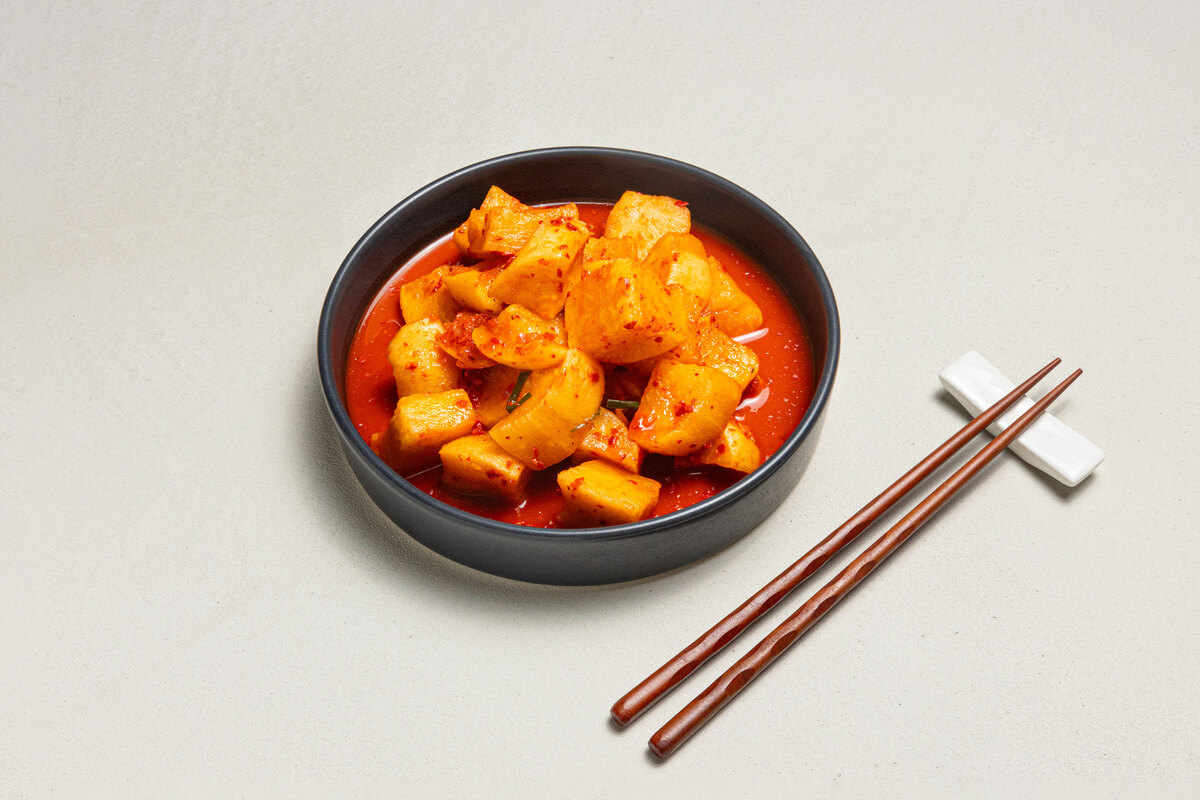
What Is Kaktugi
Kaktugi is Korean fermented radish cut into cubes and seasoned with a spicy paste made with garlic, ginger, and light fruity notes that balance out the heat. Technically, it's a variety of kimchi — but in character, it's a dish in its own right, with a bright, distinctive flavor and a satisfying crunch.
While regular kimchi is made from napa cabbage, kaktugi uses daikon or Korean radish. This produces a completely different texture: dense, firm, and crunchy in a way that holds up even after fermentation.
How Kaktugi Differs from Regular Kimchi
The main difference comes down to the base ingredient. Radish behaves quite differently from cabbage:
- it's denser and crunchier
- it holds its texture longer during fermentation
- it provides a more neutral base — spices come through more gently
- the flavor is more restrained, without the sharp acidity of cabbage
That's exactly why kaktugi appeals to people who enjoy kimchi but want something less acidic and with more textural bite.
How Kaktugi Is Served at a Restaurant
In Korean restaurant culture, kaktugi is a traditional panchan — a side dish served alongside the main courses. A small portion of spicy, aromatic radish helps bring out the flavor of meat, soup, or rice.
At Hite restaurants, kaktugi is listed as a standalone item in the salads section. A 500g portion is plenty to share at the table or enjoy as a complement to the main dishes.
What Goes Well with Kaktugi
Kaktugi is a versatile addition to most Korean dishes. It works especially well with:
- grilled meats — the radish cuts through the richness of the meat
- soups — served alongside, taken bite by bite between spoonfuls of broth
- rice dishes — the spicy radish adds character to something simple
- rich appetizers — kaktugi refreshes the palate and prevents flavor fatigue
Kaktugi doesn't overpower the main dish — it complements it. That's what makes it one of the most practical Korean sides.
Flavor and Texture: What to Expect
A first encounter with kaktugi often catches people off guard: the radish crunches with surprising sharpness, the flavor is rich, and the heat is moderate — warm and spicy rather than burning.
In well-made kaktugi:
- the radish is firm but not tough
- the spice is present but doesn't override the natural radish flavor
- garlic and ginger read as background notes, not dominant ones
- a mild tang from fermentation — a sign it's been done right
- the flavor is built on a balance of heat, fermentation, and light fruity notes
Kaktugi and Korean Food Culture
Fermented foods hold a special place in Korea — valued not only for their taste but also for digestive benefits. Kaktugi is part of this tradition. Radish is naturally light, and fermentation enhances its digestibility.
This explains why kaktugi appears at nearly every Korean table — in home cooking or at a restaurant. It's not a side dish in the conventional sense; it's an essential part of the meal.
At our restaurant, kaktugi is made using traditional technique — preserving the crunch and balancing the spices. Try it alongside grilled meats or soups, and you'll understand why kaktugi has become such a fixture of Korean cuisine.