


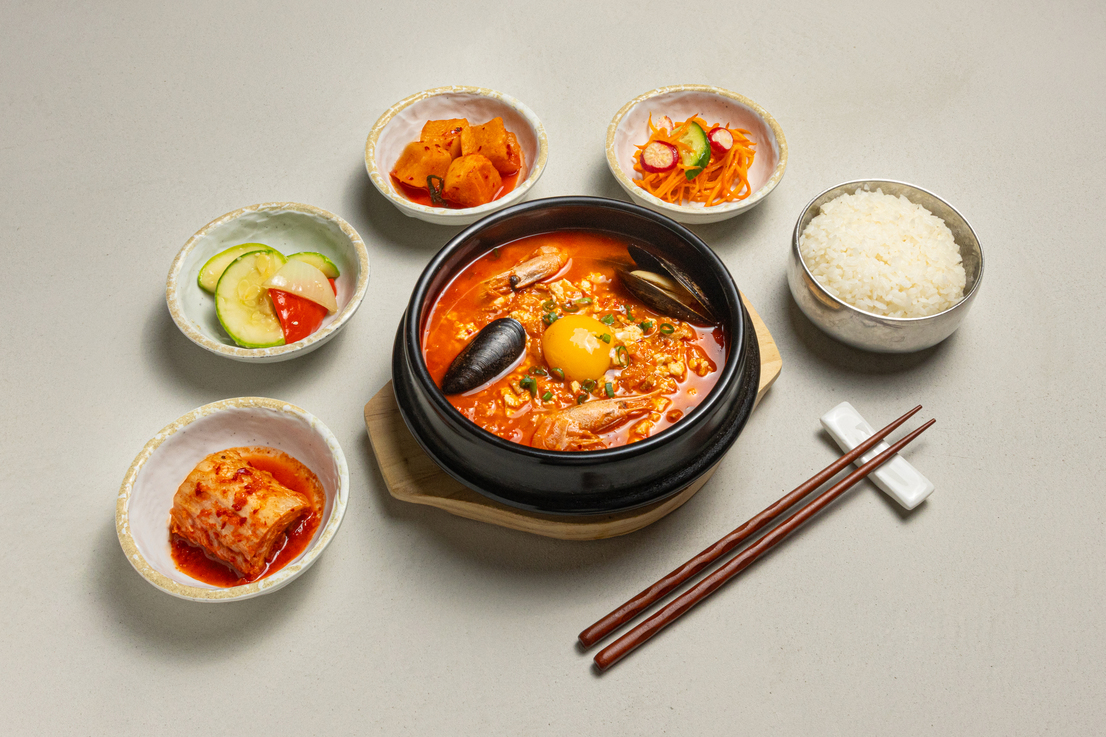
Types of Korean Soups
Korean cuisine is famous for its diverse array of first courses, each with a unique taste and purpose. Korean soups are not just food; they are an important part of the dining culture, where each soup has its own history and cooking tradition. From light broths to rich thick soups, from refreshing cold to warming spicy ones - Korean cuisine offers a wide spectrum of first courses for any taste and occasion.
Classification of Korean Soups
Korean cuisine has several main categories of soups. The first group is "guk," light clear broths with vegetables, meat, or seafood. The second category is "tang," more hearty and thick soups that are often cooked for a long time to achieve a rich flavor. The third group is "jjigae," thick stew-like soups served in ceramic pots and eaten with rice.
Popular Types of Soups with Names
Among the variety of Korean soups, there are several particularly popular ones. Guksu is a cold noodle soup, perfect for hot summer days. Kimchi soup (kimchi jjigae) is one of the most beloved Korean soups, spicy and rich, made with fermented cabbage. Beef soup (yukgaejang) is distinguished by its rich meaty flavor and spicy notes.
Soups with Seafood and Seaweed
Seafood soup is an important part of Korean cuisine, as the country is surrounded by seas. Seafood soup (haemultang) includes shrimp, mussels, squid, and fish in a spicy broth. Seaweed soup (miyeokguk) is traditionally made for birthdays and new mothers, as seaweed is rich in iodine and beneficial micronutrients. This soup has a delicate taste and light texture.
Spicy and Thick Soups
Spicy soup is the calling card of Korean cuisine. Bugeotang is a spicy pollack soup that is especially popular in winter. The thick soup sundubu-jjigae is made from soft tofu, seafood, and spicy gochujang sauce. Such soups warm you up in cold weather and provide energy for the whole day.
Noodle Soups
Noodle soup holds a special place in Korean cuisine. Kalguksu is a soup with homemade wide noodles in chicken or anchovy broth. Korean-style ramen is an adapted dish with noodles in spicy broth with egg and vegetables. Cold naengmyeon soup with buckwheat noodles is served with ice cubes in a refreshing broth.
Hangover Soups
Hangover soup (haejangguk) is a traditional Korean dish for recovery after a feast. There are many variations of this soup: with pork bones, with beef blood, with cabbage and seafood. These soups are rich in protein and help the body recover faster.
Cooking Recipes
Korean soup recipes are diverse but have common principles. The basis of most soups is quality broth from meat, bones, seafood, or anchovies. Spices and seasonings play an important role: soy sauce, gochujang (spicy chili paste), garlic, ginger, green onions. Many recipes are passed down from generation to generation, and each family has its own cooking secrets.
Basic Ingredients for Korean Soups:
-
Base - meat, fish, or vegetable broth
-
Protein component - meat, fish, seafood, tofu
-
Vegetables - cabbage, radish, green onions, mushrooms
-
Spices and sauces - gochujang, soy sauce, garlic, ginger
-
Noodles or rice as a side dish
Culture of Consumption
In Korea, soups are eaten not only as a first course but also as a main dish, served with rice and various panchan (side dishes). Thick jjigae soups are placed in the center of the table, and all participants eat from one communal pot. Cold soups are popular in summer as a refreshing dish, while hot spicy soups warm you up in winter.
Health Benefits
Korean soups are not only tasty but also healthy. Seaweed soup is rich in iodine and calcium, beef soup contains lots of protein and iron, and spicy soups improve metabolism and strengthen immunity. Broths are easily digested by the body and help restore strength after illness or a hard day.
Conclusion
Korean soups are a whole universe of flavors and traditions. From light broths to rich thick soups, from cold refreshing to hot spicy ones - everyone will find a soup to their liking. Recipes are passed down from generation to generation, preserving the cultural heritage of Korean cuisine.
What is Kimchi and What is it Made Of
Kimchi is a national dish of Korean cuisine that has become a symbol of the country and part of UNESCO's world cultural heritage. To explain what it is, one can say: it's fermented vegetables, most often cabbage, with the addition of spicy seasonings and spices. In this article, we'll detail what kimchi is made of, what benefits kimchi has, and what role it plays in Korea.