


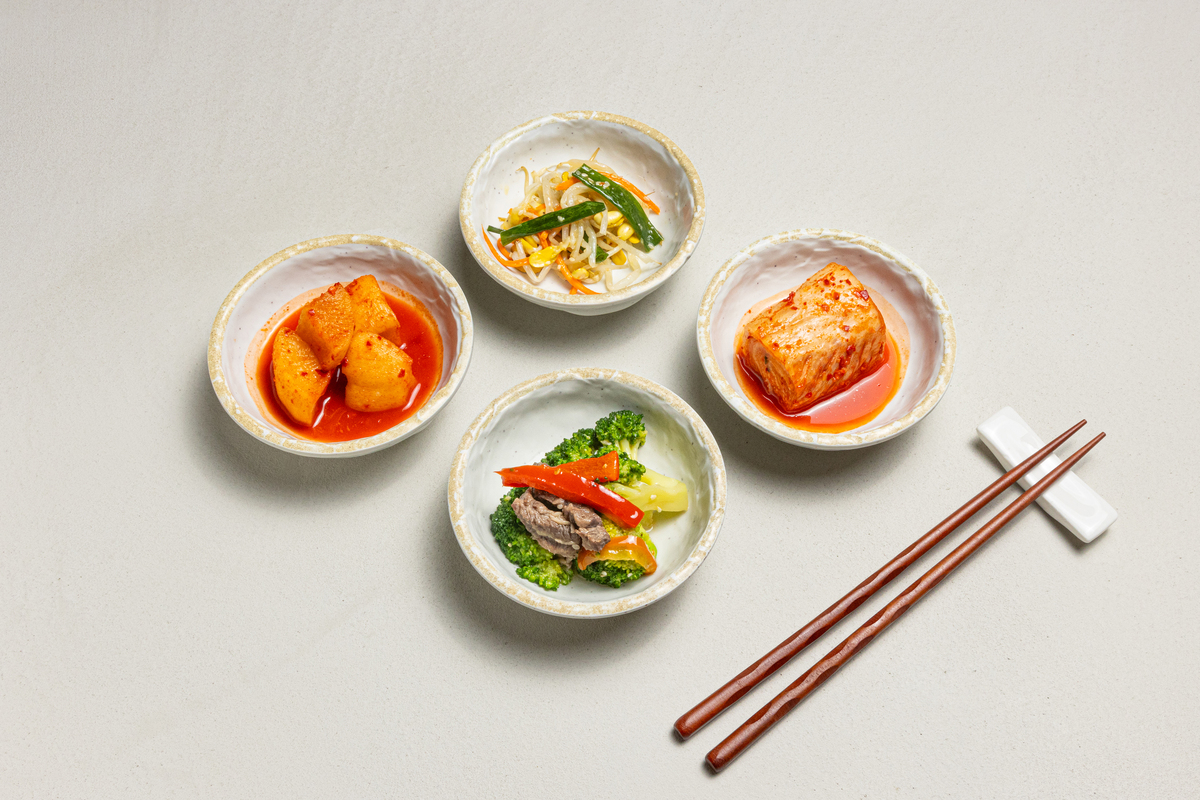
Korean Salads and Appetizers (Banchan): What They Are and What to Try
Korean salads and appetizers are traditional dishes of Korean cuisine served with the main meal. In Korea, these appetizers are called banchan, though in Russian-speaking restaurant environments, the more adapted name panchan is more commonly used.
Panchan are not just an addition to the meal. They're where the Korean table begins: they set the taste, mood, and balance of the entire meal. Bright, spicy, crispy — these dishes are loved for their rich flavor and the feeling of lightness after eating.
What Is Panchan in Korean Cuisine
Panchan are small appetizers served alongside main dishes. Traditionally, several panchan are placed on a Korean table — from three to ten or more, depending on the meal format.
The main principle of panchan is balance of flavors:
-
spiciness
-
tanginess
-
saltiness
-
light sweetness
No single flavor should dominate. Everything works together.
Unlike familiar salads:
-
mayonnaise is almost never used
-
vegetables are cut very thinly
-
dishes are given time to marinate
Good panchan develops gradually — which is why after some time it often becomes even more flavorful.
What Korean Salads and Appetizers Are Made From
Korean cuisine is built on simple products, but with great attention to quality and ingredient preparation.
Main Products for Panchan:
-
vegetables: carrots, cucumbers, cabbage, radish, eggplant
-
greens and spices: garlic, green onions, cilantro
-
mushrooms: wood ear, shiitake
-
legumes: soybean sprouts
-
meat and seafood: beef, squid
Special attention is paid to cutting. Vegetables are cut into thin strips or grated — this way they absorb the marinade faster and maintain a crunchy texture.
What Korean Salads Are Dressed With
The dressing is the foundation of flavor for any panchan. It's what creates that characteristic aroma by which Korean appetizers are recognized from the first bite.
Classic Korean Dressing:
-
red pepper flakes gochugaru
-
soy sauce
-
rice or apple vinegar
-
sesame oil
-
garlic
-
a little sugar for balance
Often spices are poured with hot oil to release their aroma. At this moment, the kitchen fills with a spicy scent that's immediately associated with Korean food.
Most Popular Korean Panchan
In Korean cuisine, there are many types of panchan — from fermented to fresh and crunchy.
Most Famous Korean Salads and Appetizers:
-
Kimchi — fermented cabbage, the foundation of Korean cuisine
-
Kkakdugi — pickled radish, cut into cubes
-
Namul — vegetable appetizers with sesame oil
-
Kongnamul — soybean sprout salad
Korean-style carrots deserve special mention. This is not a classic Korean panchan, but an adapted dish that appeared among Soviet Koreans. Nevertheless, thanks to the spices and preparation technique, it's firmly associated with Korean cuisine and remains one of the most popular appetizers.
Why Panchan Are Considered Healthy
Korean salads and appetizers are valued not only for their taste but also for their effect on well-being.
Panchan:
-
are rich in fiber
-
contain minimal fats
-
don't overload the body
-
aid digestion
Fermented dishes like kimchi additionally support gut microflora. That's why in Korea, panchan are eaten daily, not just on holidays.
Panchan at Home and in Restaurants
Korean salads and appetizers can be made at home, but the true flavor of panchan is revealed with precise adherence to proportions, proper cutting, and marinating time.
In a Korean restaurant, panchan are prepared as part of a unified meal — in small portions, with attention to spice balance and pairing with hot dishes. Here they don't play a secondary role but set the rhythm of the entire meal.
At our Korean restaurant, panchan are served the way we prepare them for ourselves: fresh, crispy, aromatic, and balanced in taste.
Korean salads and appetizers are an important part of Korean gastronomic culture. Through panchan, the character of the cuisine is revealed, its respect for ingredients, and the ability to find balance between taste and health benefits.